People travel to these places to experience nature, but the collective demand to experience it can threaten the qualities that attracted them in the first place
Returning to Moher
I first visited the Cliffs of Moher in Ireland decades ago, before the redevelopment of the visitor facilities that opened in 2007. My memories of that visit are of roadside parking, wire fences and the freedom to roam the clifftops along naturally worn footpaths through the grass. The Atlantic winds were strong, a force in themselves, making you conscious of the exposed landscape and the proximity of the cliff edge.
Returning this summer, I found a place I recognised but one that had changed considerably. The cliffs remained magnificent, their scale and exposure to the Atlantic as compelling as I remembered. But the experience of being there was different.
I could appreciate the thought and design that had gone into the infrastructure. There was an obvious purpose to it: providing facilities, managing access and responding to the demands of a landscape visited by large numbers of people. Yet I also felt confined by it. It wasn't a particularly busy day, but it was too busy for me.
I felt something else, too. I was sad that the person accompanying me couldn't experience the place in the raw way I remembered it. I wasn't suggesting that their experience had no value, or that my earlier visit was better in every respect. But I was conscious that the place I remembered, and the freedom I associated with being there, were no longer quite the same.
Perhaps this is an inevitable part of returning to places after many years. We change, our memories shift, and the world continues to change around us. We can never quite return to an earlier experience because we are no longer the person who had it.
But I wonder whether something else has changed, too: the way we encounter places before we ever arrive.
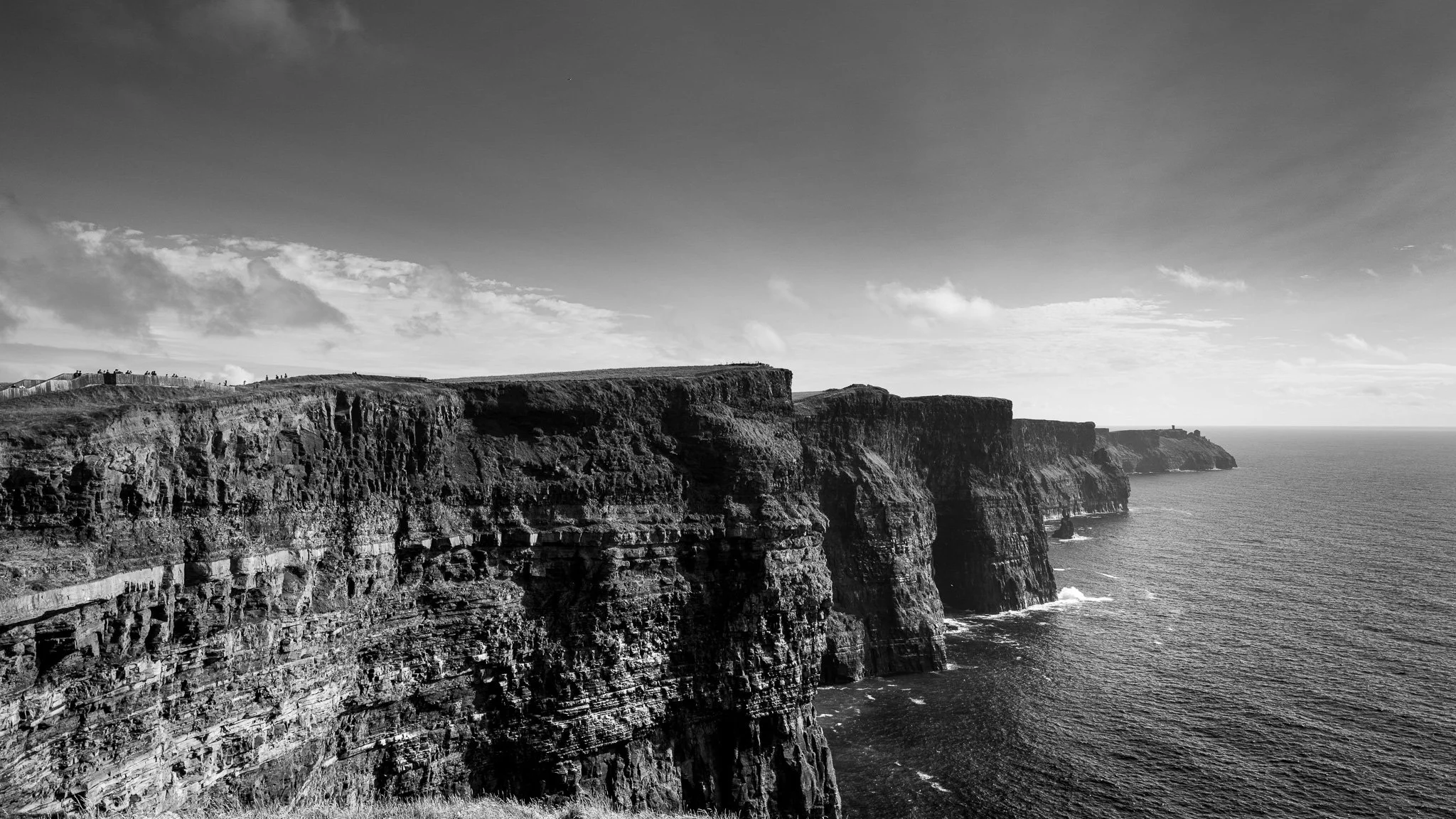
Built steps and structure (left) part of the 2007 developments.
The landscape before the visit
Social media has made it possible to become familiar with a landscape through thousands of images before experiencing it for ourselves. We recognise the views, the landmarks and the familiar compositions. An Instagram location tag can help us find a place, but it also places that location within a network of images through which it is promoted, desired and repeatedly visited.
We may arrive with our own memories or expectations, but we also arrive with images made by other people. Sometimes we are looking for something new; sometimes we are looking to experience something we already recognise.
There is a subtle difference between discovering a place and reproducing an image of it. The photograph can become more than a record of an experience. It can become part of the reason for making the journey in the first place.
This doesn't mean that social media inevitably diminishes our experience of a place. Photographs can inspire curiosity, encourage people to explore unfamiliar landscapes and deepen our appreciation of the natural world. My own photography is part of that process. But the circulation of images can also turn a location into a recognised destination, with familiar viewpoints and expectations about what a visit should deliver.
The image begins to precede the experience.
I started to wonder how this way of encountering places connects with the physical changes I saw at Moher. The development of visitor infrastructure, the promotion of destinations and the circulation of images online are not the same thing, but they can reinforce one another. As places become more desirable, more people want to visit them. As more people visit, there is greater pressure to manage access and accommodate demand. And as the visitor experience becomes more organised, the place itself changes.
I had returned to Moher wanting to experience something I remembered. But I was also encountering a place shaped by contemporary expectations of tourism: a destination to be accessed, explored, photographed and experienced.
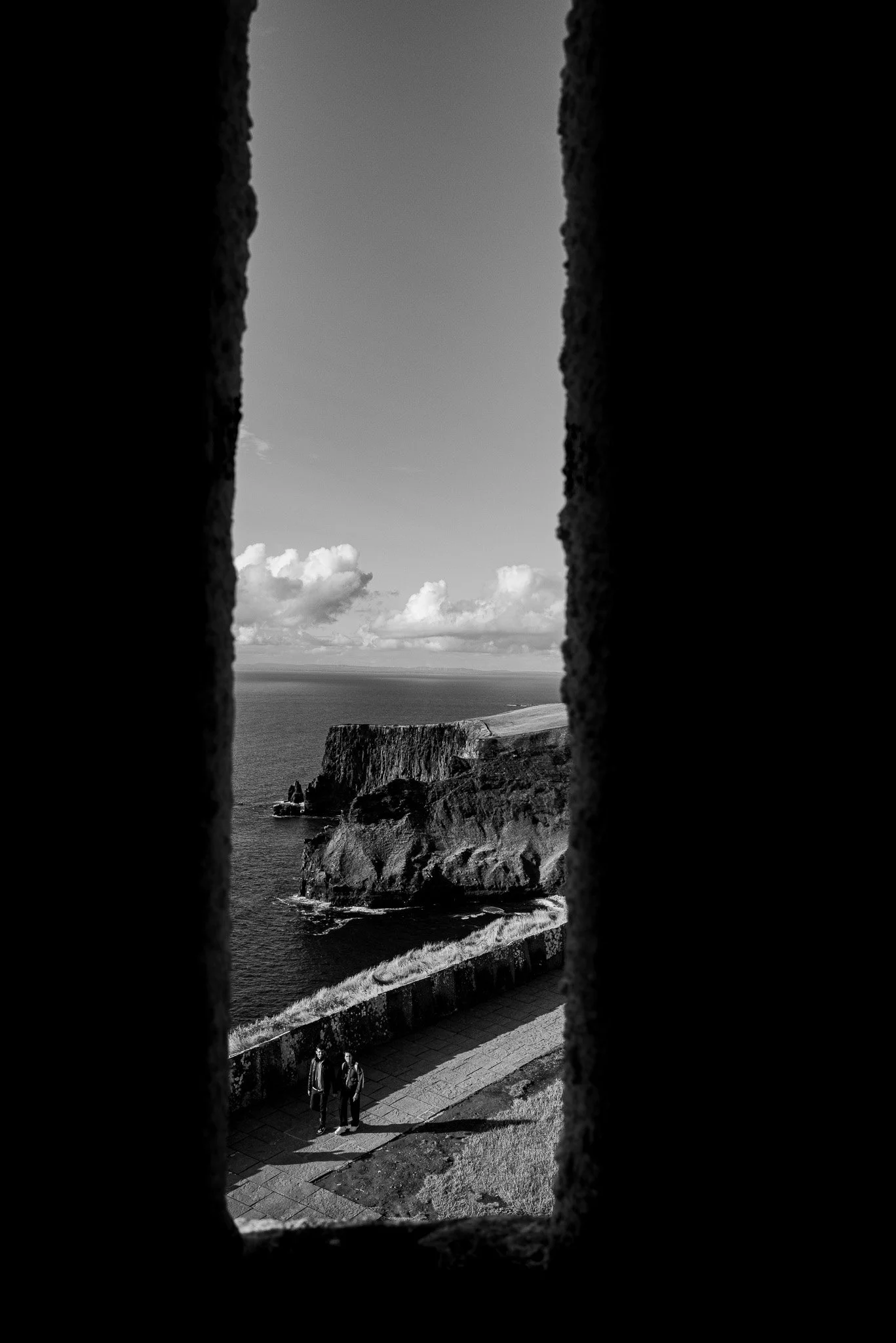
O'Brien's Tower: A round stone observation tower built in 1835 near the midpoint of the cliffs.
When the experience becomes organised
The redevelopment at Moher was intended to accommodate visitors and provide facilities at a major tourist destination. There are practical reasons for doing this. Popular landscapes present challenges around safety, access, traffic, environmental protection and the number of people wanting to experience them.
Infrastructure can address these challenges. It can improve safety, make places more accessible and help protect fragile environments. I don't dismiss any of that, and I don't think the answer is simply to return to how things were.
But infrastructure does more than accommodate people. It shapes what people do.
Paths, viewing areas, barriers, buildings and designated routes influence how we move through a place. They create possibilities, but they also establish boundaries. They encourage certain behaviours while making others less likely. Our experience of a landscape is therefore never entirely separate from the arrangements through which we encounter it.
The worn footpaths I remember were shaped by people moving through the landscape, finding their own way across the grass. They weren't without human influence or risk, but they gave me a sense of movement that felt organic rather than prescribed. The wind, the terrain and the exposure demanded attention. I had to respond to the landscape as I encountered it.
On returning, I became more conscious of the extent to which the visitor experience had been designed around me. The landscape remained, but the conditions through which I experienced it had changed.
There is a difference between arriving somewhere and discovering how you want to experience it, and arriving somewhere where much of that experience has already been anticipated and organised.
I began to wonder whether, in making a place more accessible and manageable, we can also diminish some of the uncertainty through which a more personal experience develops. The freedom to pause, wander, become distracted or discover something unexpected may seem insignificant when measured against the practical demands of managing a popular destination. Yet these things can be central to how we form a relationship with a place.
Perhaps the question is not whether we should organise access to nature, but how much organisation an experience can absorb before the nature of that experience begins to change.
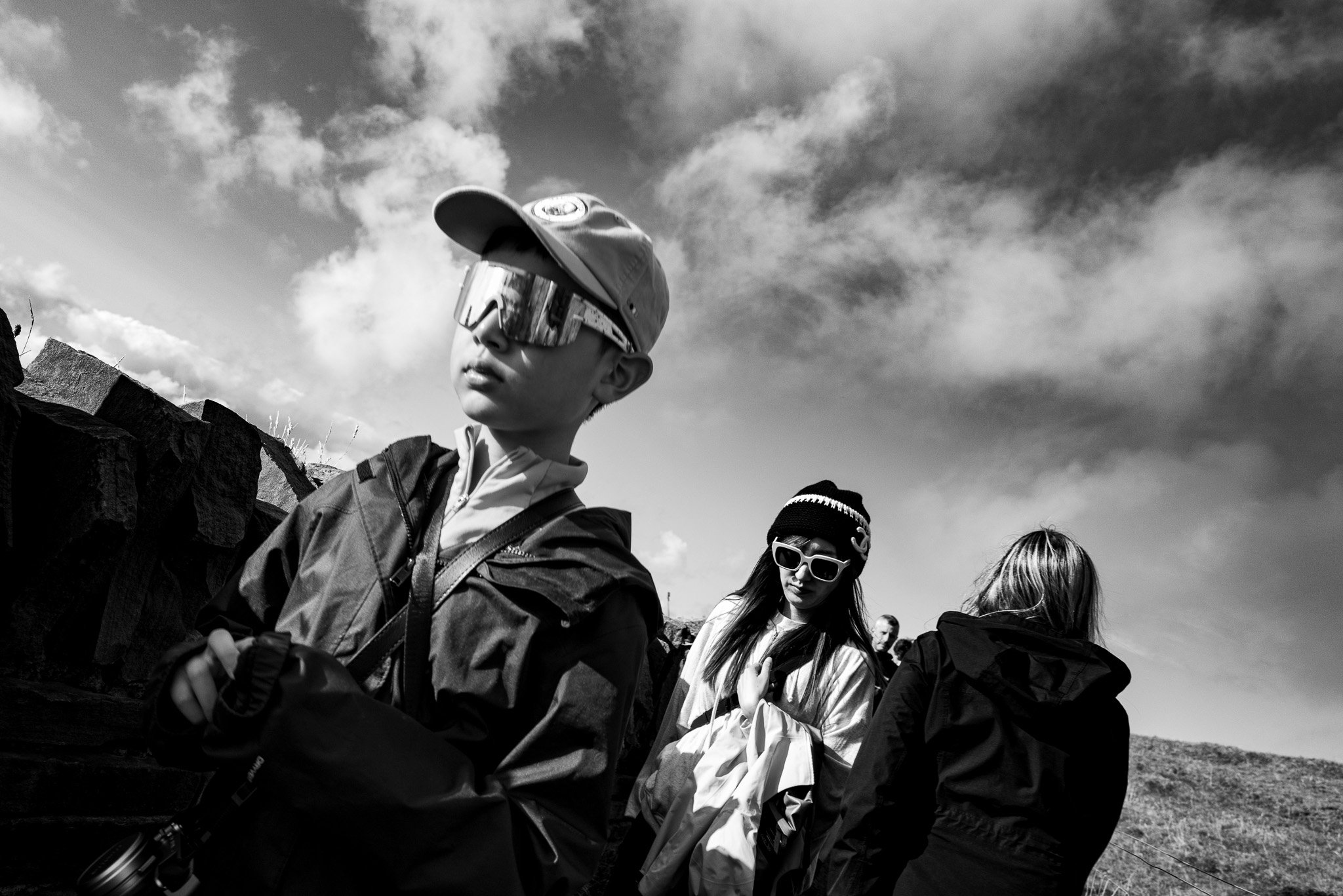
Streets in the landscape - my photographic playground
An immersive experience
One detail stayed with me. Within the The Subterranean Visitor Centre (The Atlantic Edge), visitors can experience the cliffs through a three-dimensional virtual flight, travelling above and around the landscape from the perspective of a bird.
There is something intriguing about this juxtaposition. Visitors can encounter a technological representation of the cliffs within the infrastructure designed to manage access to the actual landscape.
The virtual experience can be spectacular in its own right. It offers a perspective otherwise unavailable to most of us, revealing the scale and form of the cliffs in ways that standing on the clifftop cannot. It can also provide an experience for people who might not otherwise be able to explore the landscape in this way.
My concern isn't with technology itself. It is with the relationship between representation and experience.
To see a landscape from above is not the same as standing within it. A virtual flight offers a particular view, constructed and directed by technology. Being physically present offers something less easily controlled: the wind, the weather, the changing light, the sound of the sea, the movement of other people and the limitations of our own position within the landscape.
Immersion involves more than the amount of information we receive or the spectacle presented to us. It can require time, attention and a willingness to encounter something without knowing in advance what we will find.
I found myself considering the irony of travelling to experience the natural world, only to encounter part of that experience through a technological simulation. The actual landscape is extraordinary, yet its representation offers a different kind of spectacle, one in which the view can be controlled and delivered to us.
There is nothing inherently wrong with that. Technology can deepen our understanding of a place, and visitor centres can communicate its natural and cultural significance. But it raises a question about what we mean when we say we have experienced a place.
Is it enough to have seen its most spectacular features? Does understanding its scale and geography amount to being immersed in it? Or is there something important in the experience of being physically present, exposed to conditions we cannot entirely control and free to pay attention to whatever happens to draw us in?
I found myself wondering whether, in trying to bring the landscape closer to us, we sometimes create a distance between ourselves and the experience of being there.
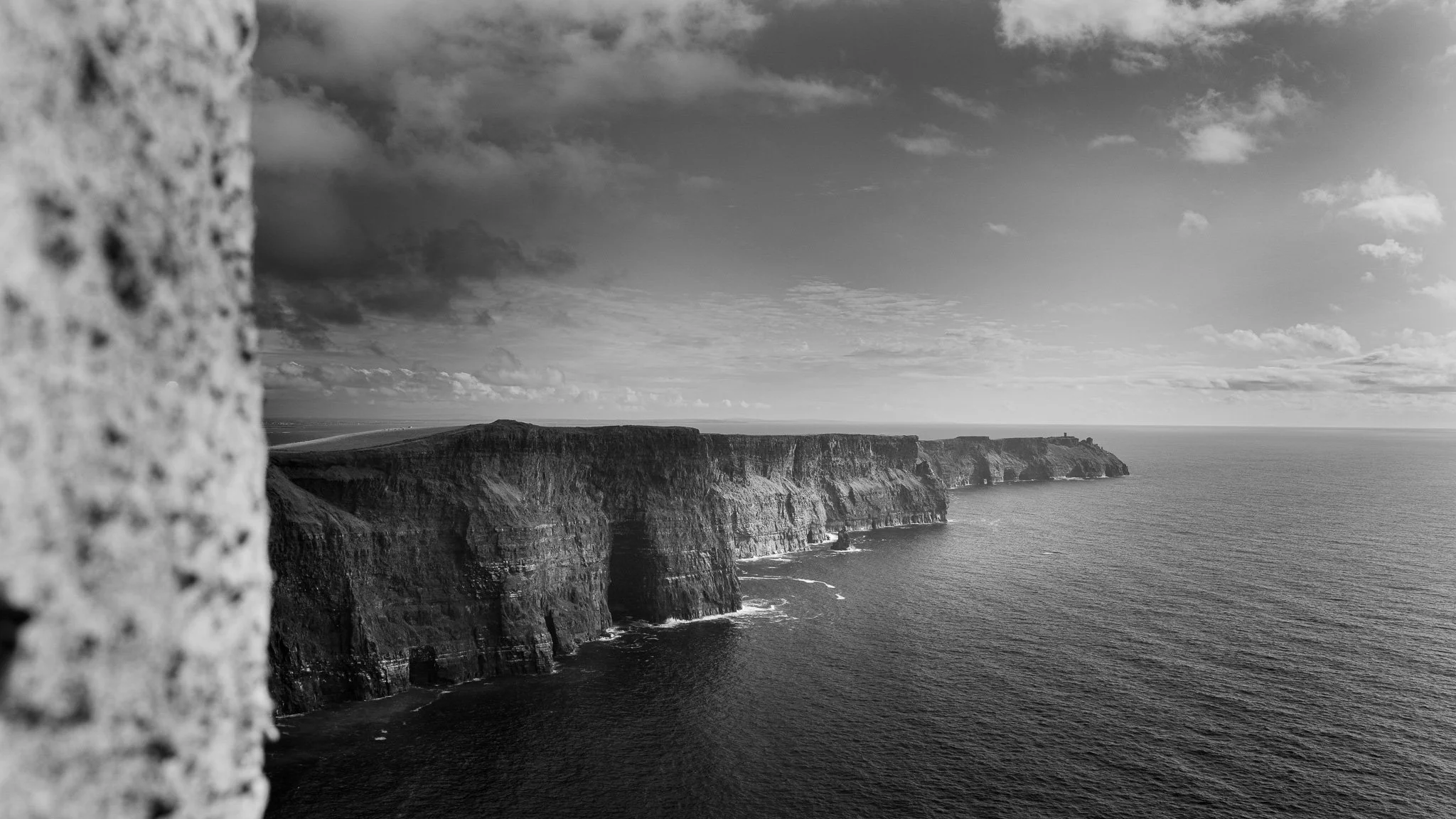
The Cliffs to the South from O'Brien's Tower
The people within the landscape
My photographs became a way of exploring these thoughts, although I didn't necessarily recognise them in those terms while making them.
We tend to associate street photography with people occupying the built environment, while landscape photography often places the natural world at the centre and treats human presence as secondary. People appear in landscape photographs to provide scale, establish a sense of place or give the viewer some indication of the magnitude of the scene.
But what happens when we give those people our attention?
At Moher, I found myself looking at people in much the same way I might in a city. I noticed their movements, their interactions and the moments in which they stopped to look, take photographs or simply occupy the space. I was interested in how they behaved within their surroundings and how their presence contributed to the experience of the place.
This wasn't a deliberate attempt to turn landscape photography into street photography. It was a way of seeing that had developed through my documentary work, following my curiosity towards the human elements of an environment.
The people weren't incidental intrusions into an otherwise pristine landscape. They were part of the contemporary reality of the place. They had travelled there to experience the cliffs, just as I had. They were looking, waiting, moving, photographing and sharing the experience with others.
By paying attention to them, I began to see the landscape not only as a natural spectacle but also as a place being occupied and experienced collectively.
This is familiar territory in documentary photography. In an urban setting, the relationship between people and their surroundings can reveal something about how public space is used, organised and shared. A pavement, a bench, a shopping street or a public square is more than a physical setting. It becomes a place through the activities, interactions and relationships that take place within it.
Perhaps the same attention can be applied to a landscape that has become a major tourist destination. The people, the infrastructure and the natural environment are not separate subjects. They are elements of the same contemporary place.
The distinction between urban and landscape photography begins to feel less fixed. What changes is not necessarily the photographer's way of seeing, but the environment in which that way of seeing is applied.
The photographs offered me a way to pay attention to the human experience of Moher without losing sight of the landscape that had drawn us all there. They also made me consider how much of that experience was shaped by the environment we had arrived to encounter.
The economic value of nature
There is an economic reality to this that I cannot ignore. Protecting a landscape requires resources. Visitor facilities need to be maintained, paths managed, habitats protected and the effects of human presence addressed. Tourism revenue can help fund this work, while supporting employment and businesses in the surrounding area. The natural environment does not exist outside the economy in which decisions about its future are made.
Ireland provides a useful context for thinking about this relationship. Its economic success is often described through headline figures that require careful interpretation, particularly because the activities of multinational corporations can distort conventional measures of national output. The Irish economy is not reducible to tourism, but its landscapes form part of a wider economy in which places, experiences and cultural identities can acquire commercial value.
There is nothing inherently wrong with generating income from tourism. The difficulty arises when the means of sustaining a place become inseparable from the means of consuming it.
The visitor centre at Moher provides facilities and helps manage access, but it also forms part of the visitor experience. The virtual flight offers another way of encountering the cliffs, bringing the landscape to visitors through a carefully constructed technological experience. These developments can provide value, communicate information and support the management of a popular destination.
Yet they also raise a question about what we expect from a visit to nature. Is the landscape something we encounter, with all the uncertainty and limitations that physical presence involves, or is it an experience to be delivered to us in increasingly accessible and engaging forms?
Perhaps it is both. The problem is not that we generate revenue from tourism, nor that technology mediates our understanding of the natural world. It is whether the economic model begins to determine the terms on which the landscape must be experienced.
If protecting a place depends on its continued commercial appeal, there is a risk that its value becomes tied to its capacity to attract visitors. The landscape must remain desirable, accessible and capable of accommodating demand. But the ecological value of a place does not necessarily increase with its popularity, and its capacity to sustain visitors has limits.
This is where I began to think about the relationship between economic and ecological systems.
Economic and ecological systems
An ecological ecosystem consists of interdependent relationships between living organisms and their physical environment. Its component parts cannot be understood entirely in isolation from one another. Changes in one part of the system can affect the others.
An economy is also a system of relationships, connecting work, investment, consumption, production and the allocation of resources. But economic systems can operate as though the natural world is simply a resource to be used, managed and developed, rather than the living environment within which all economic activity ultimately takes place.
At Moher, these systems meet in a particularly visible way.
The landscape attracts visitors. Visitors generate economic activity. That activity can provide resources for infrastructure, conservation and local livelihoods. Yet the growth of tourism also creates pressures that require further management, while the infrastructure developed in response influences the environment and the experience of being there.
These processes are interconnected, but they are not automatically balanced.
A landscape may become more economically valuable as a destination at the same time as the pressures placed upon it increase. Revenue can help address those pressures, but it does not automatically cancel them out. Nor does economic success necessarily mean that the ecological system is thriving.
This is the tension I find myself questioning. If the ecological environment is the foundation upon which the economic activity depends, what happens when the demands of that activity begin to reshape the environment to suit themselves?
Capitalist ideology encourages us to understand value through demand, exchange and the potential for growth. Applied to tourism, a landscape becomes a destination whose appeal can be marketed, whose visitor numbers can be increased and whose economic potential can be developed. The more desirable a place becomes, the greater the incentive to accommodate the demand it generates.
Yet the natural world does not operate according to the same logic. Landscapes have ecological limits. They do not become more resilient simply because more people want to experience them, and their value cannot be measured solely by the economic activity they generate.
There is a contradiction in wanting to experience nature while participating in systems that can transform it into a commodity. We travel to escape the routines of everyday life, seeking something beyond the built environment and the demands of work and consumption. But the experience of escaping can itself become a commercial product, complete with infrastructure, marketing and images that tell us what is worth seeing.
I am not suggesting that tourism and environmental care are incompatible, or that visitor facilities are inherently wrong. The question is which values shape the decisions we make. Is the priority to maximise the number of people who can experience a place, or to establish what level and form of access the landscape can sustain? Can economic activity serve the long-term interests of the environment and its communities, rather than making the environment serve the demands of economic activity?
I cannot separate myself from this contradiction. I travelled to Moher because I wanted to experience the cliffs again, and I took photographs. I was part of the collective demand I was reflecting upon. I cannot place myself outside the problem simply because I began to question it.
That, perhaps, is what makes the contradiction worth examining. We are not simply observers of the pressures placed on landscapes. We participate in them, even when our intentions are to appreciate, understand or celebrate the natural world.
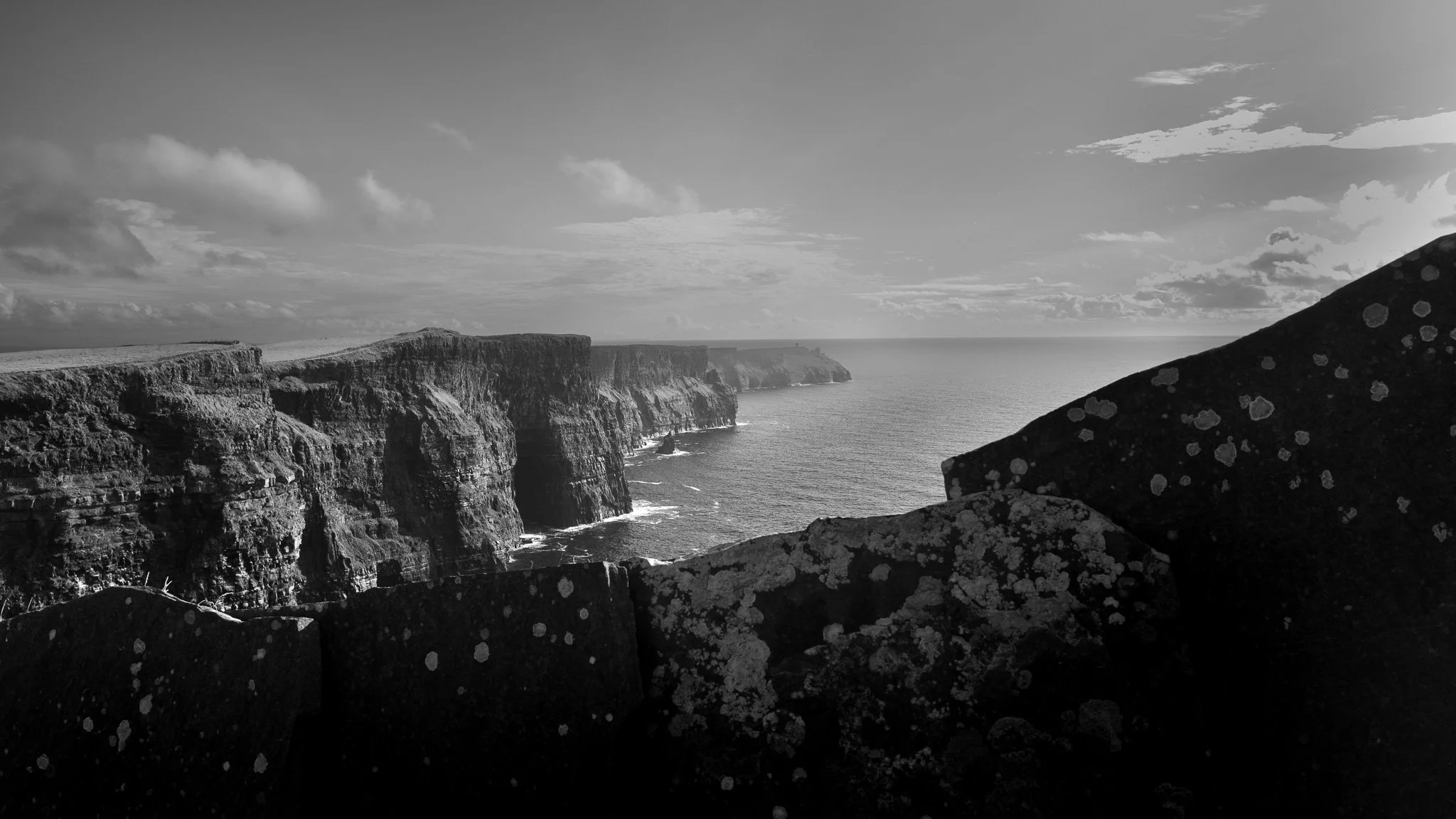
Natural barriers of safety
Looking again
I returned to Moher expecting to recognise a landscape I remembered. Instead, I found myself thinking about how places change, how experiences are organised and how the way we look at a place can change alongside it.
The cliffs remained magnificent. My response to them was not diminished by their beauty, but complicated by the environment through which I encountered them. I could appreciate the design of the infrastructure and still feel confined by it. I could recognise the benefits of managed access and still feel sad that the person accompanying me could not experience the place as I remembered it.
Those feelings don't cancel each other out. They are part of what it means to encounter a place with a history, both personal and collective.
Photography gave me a way to explore that tension. By paying attention to people within the landscape, I found myself looking beyond the expected spectacle and towards the contemporary reality of the place: how it was occupied, how people moved through it and how their experience was shaped by the environment around them.
Perhaps photography can help us recognise the difference between looking at a place and being immersed in it. Not by providing a definitive answer, but by slowing our attention and allowing us to notice what our desire to see the spectacle might otherwise obscure.
I don't think the answer is to turn back the clock or to deny people the opportunity to experience extraordinary landscapes. My earlier visit cannot simply be restored, and the freedom I remember may not be the freedom everyone wants or needs.
But I do wonder whether we have become so accustomed to organising, presenting and consuming experiences that we risk overlooking the value of encounters that are less predictable and less easily directed.
What would it mean to make space for curiosity, uncertainty and the freedom to experience a landscape on our own terms? How might we provide access without assuming that every aspect of the experience needs to be anticipated? And how do we recognise that the qualities we travel to experience may be altered by the collective effort to make them available to everyone?
I returned to Moher with memories of the place I had visited decades earlier. I left thinking not only about what had changed in the landscape, but about the relationship between people and the places they seek out.
The cliffs remain. What changes is how we encounter them, what we expect from them and what we make of the experience.
Perhaps the challenge is not simply to preserve landscapes so that people can continue to visit them, but to consider how we might encounter them without diminishing the very qualities that make us want to be there.
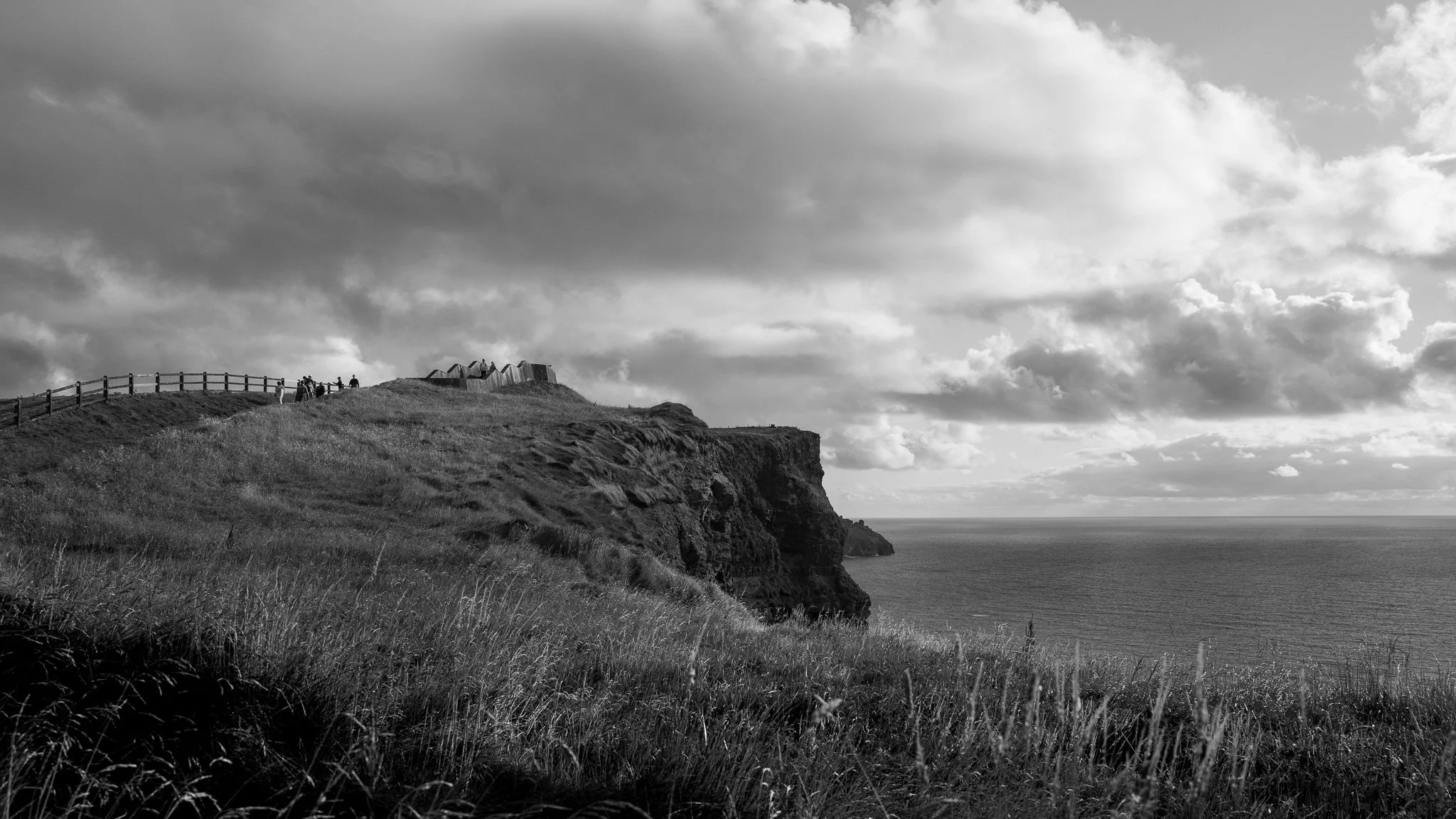
800 Metres of Secured Pathways
Thanks for reading, all images are available in print Contact me to discuss or if you enjoyed and just want to show some appreciation head over to Buy me a Coffee
Thanks
Scott